logo logo
  • Home
  • About
  • Blogs
  • Services
    • Digital Marketing
    • Social Media Marketing
    • SEO
    • Web Development
    • Video Marketing
    • Content Marketing
  • Contact
Subscribe
Brightveins BlogsBrightveins Blogs
Search
  • Home
  • About
  • Blogs
  • Services
    • Digital Marketing
    • Social Media Marketing
    • SEO
    • Web Development
    • Video Marketing
    • Content Marketing
  • Contact
Subscribe
awsHealth
Blog

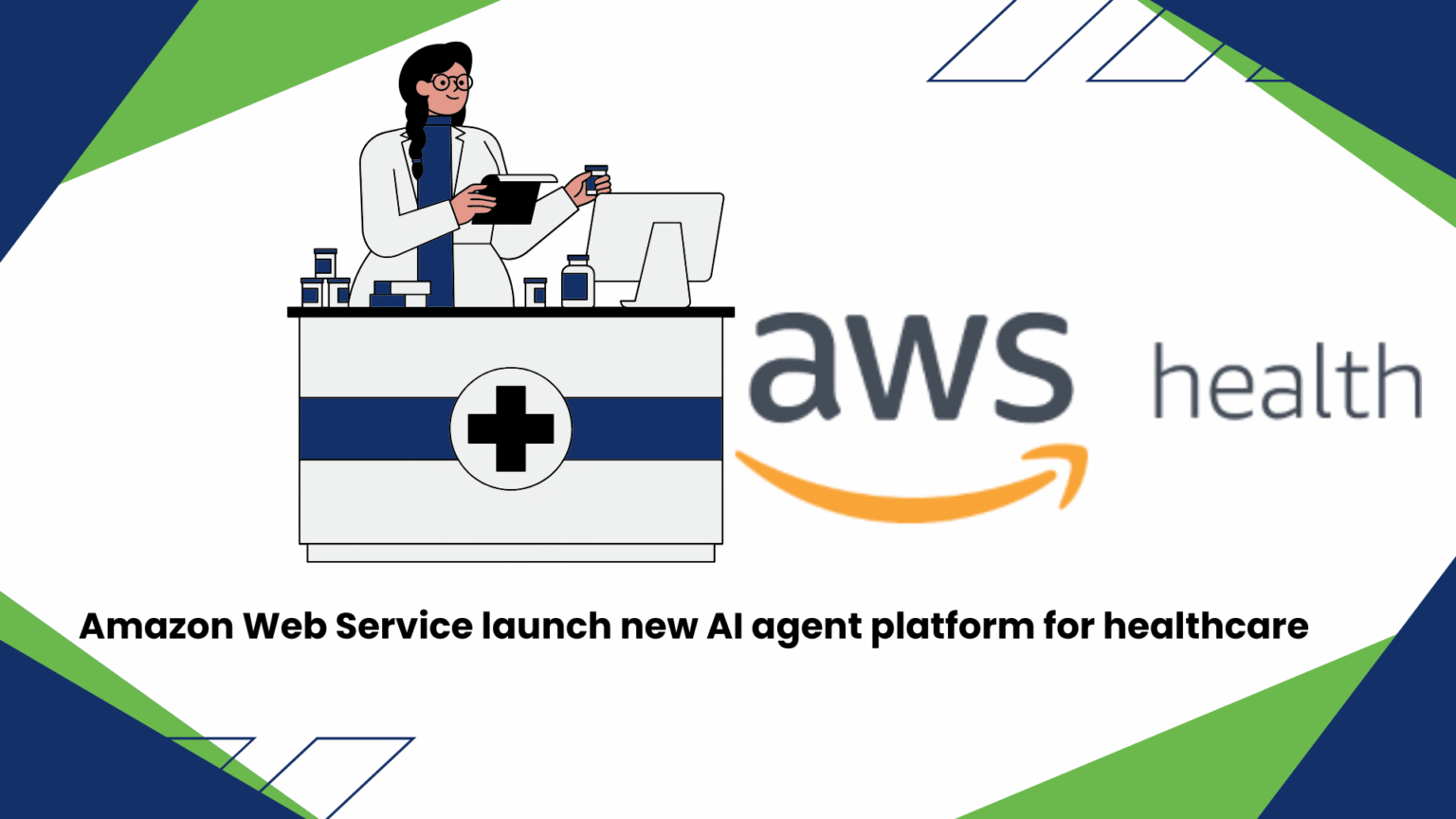
AWS Health : Amazon Web Service launch new AI agent platform for healthcare

Gaurav Kumar
By
Gaurav Kumar
ByGaurav Kumar
Follow:
Published: March 7, 2026
Share
9 Min Read
SHARE
Highlights
  • Amazon Web Services launched Amazon Connect Health to automate healthcare administrative tasks like scheduling, documentation, and patient verification.
  • The HIPAA-eligible platform integrates with EHR systems and uses AI agents to support clinicians and reduce administrative workload.
  • The launch strengthens AWS’s expansion into the healthcare industry alongside services like Amazon Comprehend Medical and Amazon HealthLake.

Amazon Web Services has released the availability of Amazon Connect Health, a new AI-agent based service aimed at assisting healthcare organizations to automate repetitive administrative tasks. The context of the platform is to remove the increasing operational load in the field of healthcare by making the processes of scheduling appointments, documentation, and checking the patient easier.

Contents
A New AI in Healthcare WorkflowIt is not the First Move in healthcare by AWSThe way AI Agents will assist CliniciansFeatures Coming SoonPricing and AccessibilityThe Broader Healthcare Strategy of AmazonDelivery of prescription within a dayThe Future of AI in Healthcare

A New AI in Healthcare Workflow

Medical facilities in various parts of the globe are experiencing growing administrative burdens which tend to slow down the delivery of care to the patient and in turn burn out clinicians. Healthcare personnel and doctors waste much time on documentation, checking of patients, and scheduling issues instead of concentrating on the treatment of patients.

AWS is trying to overcome this dilemma with the introduction of Amazon Connect Health, through which intelligent AI agents can be used to carry out complex tasks on behalf of medical workers. Such AI agents will provide the automation of workflow, the organization of information and support clinicians in routine administrative tasks.

It is HIPAA-eligible, i.e., the platform is developed to meet severe healthcare privacy regulations in the United States. It is also capable of integrating with Electronic Health Record (EHR) software, which enables the healthcare providers to integrate the system into their current clinical processes.

AWS stated that the platform has already collaborated with a number of EHR providers, healthcare data integration firms and patient engagement platforms to guarantee a well-established interoperability across systems.

It is not the First Move in healthcare by AWS

Amazon connect health is a significant new move by AWS in the healthcare AI, but it is not the first project by the company in this field. Over the years, AWS has been steadily developing healthcare-oriented cloud and data services and is now striving to increase its participation in the huge $5 trillion American medical sector.

In 2018, AWS introduced Amazon Comprehend Medical, an artificial intelligence-based natural language processing service that removes information in unstructured medical records like clinical notes and patient records. The service is also eligible in HIPAA and assists healthcare providers with the analysis of large amounts of medical text in a more efficient manner.

Three years afterwards, AWS launched Amazon HealthLake, which is a service created to structure healthcare data on the basis of Fast Healthcare Interoperability Resources (FHIR) standard. HealthLake assists healthcare organizations in storing, organizing, and analyzing information in health in a centralized system.

In 2022, the company also launched AI-based healthcare technology AWS HealthOmics, which is a bioinformatics workflow platform used to facilitate genomic research and massive analyses of biological data.

Although Amazon Connect Health is not the first in this category, it is the first significant product of the company in which the AI agents specifically work and execute their functions on the regulated healthcare platform.

The way AI Agents will assist Clinicians

AI agents are computer programs that can work on their own, including replicating the process of human decision-making. These agents may greatly minimize manual work and assist clinicians with huge amounts of information in a healthcare setting.

Amazon connect health is meant to be connected with the existing clinician software systems. This will enable the platform to support a number of administrative processes, such as:

Examination of medical history of patients.

  • Backing up clinical documentation.
  • Assistance in medical coding.
  • Routine administrative procedures should be automated.

The site has two important features at the moment:

  • Patient Verification AIs can identify the patients and check their identities and information prior to appointment or consultation.
  • Ambient Documentation – The system will be able to produce documentation automatically when interacting with patients and minimizes the manual taking of notes.

Another point made by AWS is that more features are under development.

Features Coming Soon

There are a number of features that are being previewed and will be released with updates. These include:

  • Appointment Scheduling: AI agents will assist patients in automatic scheduling, or amending and confirming appointments.
  • Patient Insights: The system will use patient data to offer clinicians with valuable information prior to the consultation.
  • Medical Coding Automation: AI will help healthcare practitioners to transform clinical data into standard medical codes that are used to bill and insure in the process of health care.
  • AWS is aiming to develop a fully automated system of administration of healthcare providers by adding these features gradually.

Pricing and Accessibility

The subscription cost of Amazon connect health will be based on the number of users who will be able to support up to 600 patients encounters monthly at a price of 99 per user per month.

AWS observed that the average primary care physician normally works about 300 encounters per month, which implies that the pricing model used in the platform is meant to comfortably accommodate average clinical work.

When the announcement was done, AWS did not explain testing phases and a comprehensive rollout time frame.

The Broader Healthcare Strategy of Amazon

Amazon has much more healthcare ambitions than cloud infrastructure. The company has in the last few years undertaken significant investments and acquisitions in order to consolidate its place in the industry.

Amazon purchased an online pharmacy, PillPack, in 2018 to the value of close to one billion dollars. The purchase enabled Amazon to venture into the prescription drug delivery market.

Another significant move by the company this year was the acquisition of primary care provider One Medical in 2022 at an estimated price of 3.9 billion dollars.

Since that time, Amazon has incorporated some of these services into its wider ecosystem. Examples of features that can now be accessed by customers include:

Delivery of prescription within a day

Virtual physician appointments on the same day.

Increased digital health care services.

These initiatives mean that Amazon has a long-term plan of entering digital healthcare as a key player.

Increasing AI Healthcare Competitiveness.

Minimizing the administrative load in healthcare by using AI has been a trend among startups since long before the recent generative AI boom.

Take the example of the Regard startup that was created in 2017 and relies on AI to create clinical notes in the course of patient visits and analyzes patient data to assist in minimizing administrative burnout in doctors.

The same year saw the launch of another startup that created AI to eliminate patient intake procedures and appointment booking.

Nonetheless, the competitive environment has become increasingly competitive with the entry of the healthcare industry by the large AI companies.

In January, OpenAI launched ChatGPT Health, a variant of its chatbot which is able to answer health-related questions.

Soon, Anthropic introduced Claude to Healthcare which provides both patient and healthcare provider tools.

Whereas consumer-oriented tools such as ChatGPT Health are aimed at delivering medical information to individuals, enterprise healthcare systems such as Amazon Connect Health are aimed at assisting medical practitioners with the management of operational workflows.

The Future of AI in Healthcare

The launch of Amazon Connect Health highlights the growing role of AI agents in modern healthcare infrastructure. By automating routine tasks and integrating with existing clinical systems, AI platforms can allow doctors and healthcare staff to spend more time focusing on patient care rather than paperwork.

As AI technology continues to evolve, solutions like Amazon Connect Health may become an essential part of hospital and clinic operations worldwide, helping the healthcare industry improve efficiency, reduce burnout, and deliver better patient experiences.


Share This Article
Facebook Copy Link Print
Previous Article metaSupport Meta Data Center : Supporting Meta, Energy, Jobs, Environment, and Local Communities in the US
Next Article luma-ai-video AI video-generation startup Luma launches creative AI agents
Leave a Comment Leave a Comment

Leave a Reply Cancel reply

Your email address will not be published. Required fields are marked *

Let's Connect

FacebookLike
XFollow
PinterestPin
InstagramFollow
YoutubeSubscribe
LinkedInFollow

Popular Posts

google-chrome-hidden-gemini-ai-installation-concerns

Google Chrome’s Hidden Gemini AI Installation Sparks Transparency Concerns

Gaurav Kumar
4 Min Read
Artificial intelligence has sparked one of the biggest workplace debates of the decade. While some experts warn that automation could eliminate millions of jobs, others believe AI will become a powerful tool that creates entirely new opportunities. Adding his voice to the conversation, Amazon founder Jeff Bezos has shared a much more optimistic outlook. Speaking at the VivaTech conference in Paris, Bezos argued that AI is unlikely to make people obsolete. Instead, he believes the technology will increase the demand for skilled workers, drive innovation, and reshape industries in ways that create more employment rather than reduce it. His perspective offers an important counterpoint to growing concerns about the future of work in an AI-driven world. Why Jeff Bezos Believes AI Will Create More Jobs The fear that artificial intelligence will replace human workers has become increasingly common as AI tools automate repetitive tasks and improve productivity. However, Bezos believes this concern overlooks a bigger reality. According to him, AI will help remove many of the limitations that currently prevent businesses from growing. As organizations become more productive and innovative, they will require more people to build, manage, improve, and expand these new systems. Rather than creating mass unemployment, AI could generate a greater need for skilled professionals across multiple industries. In Bezos' view, technology has historically expanded economic opportunities instead of eliminating them permanently. AI Has Always Changed Jobs–Not Eliminated Work History shows that major technological advancements often transform jobs instead of making human workers unnecessary. The Industrial Revolution introduced machines that automated manufacturing, yet it also created entirely new professions. Similarly, the rise of computers and the internet replaced certain manual tasks while generating millions of careers in software development, digital marketing, cybersecurity, cloud computing, and e-commerce. Artificial intelligence appears to be following the same pattern. Instead of replacing every employee, AI is increasingly taking over repetitive and time-consuming tasks, allowing people to focus on creativity, strategy, decision-making, and customer relationships. This shift could improve productivity while opening the door to entirely new job categories. AI Is Creating New Career Opportunities As AI adoption accelerates, businesses are already hiring professionals with skills that barely existed a few years ago. Emerging roles include: AI Prompt Engineers Machine Learning Specialists AI Product Managers Data Scientists AI Ethics Consultants Automation Experts AI Content Strategists Human-AI Collaboration Specialists Beyond technology companies, sectors such as healthcare, education, finance, manufacturing, logistics, and marketing are increasingly integrating AI into their daily operations. This growing demand suggests that future workplaces will rely on collaboration between humans and intelligent systems rather than replacing one with the other. Not Everyone Shares the Same View While Bezos remains optimistic, opinions across the technology industry are divided. Some business leaders and economists have warned that AI could disrupt entry-level jobs, administrative roles, and repetitive office tasks. There are also concerns that rapid automation could widen skill gaps if workers are not given opportunities to adapt. Labor organizations have emphasized that AI should be implemented responsibly, ensuring productivity gains benefit employees as well as businesses. The broader consensus is that AI's long-term impact will depend less on the technology itself and more on how governments, organizations, and educational institutions prepare the workforce for change. Human Skills Will Become Even More Valuable One area where experts largely agree is that uniquely human abilities will continue to matter. Artificial intelligence can analyze data, generate content, and automate workflows, but it still struggles to replicate qualities such as the following: Creative thinking Emotional intelligence Leadership Critical decision-making Ethical judgment Complex problem-solving Relationship building As AI handles routine tasks, these human-centered skills are expected to become even more valuable in the modern workplace. Rather than competing with AI, professionals who learn to work alongside it are likely to have a significant advantage. Beyond AI: Bezos' Vision for the Future During the conference, Bezos also discussed his long-term ambitions beyond artificial intelligence. He reaffirmed his commitment to space exploration through Blue Origin, emphasizing that humanity should establish a permanent presence on the Moon instead of treating lunar missions as short-term visits. According to Bezos, expanding into space will require continuous innovation in robotics, automation, manufacturing, and AI-powered technologies. Although these projects face technical challenges, they also represent emerging industries that could create entirely new employment opportunities over the coming decades. What Businesses Should Learn from This Regardless of whether every prediction proves accurate, one message is becoming increasingly clear. Artificial intelligence is transforming the workplace. Organizations that invest in employee training, digital skills, and responsible AI adoption will be better positioned to benefit from this technological shift. Rather than viewing AI solely as a cost-cutting tool, forward-thinking businesses are beginning to see it as a way to improve productivity while empowering employees to focus on higher-value work. The future of work will likely be defined by collaboration between human expertise and intelligent automation. Conclusion Jeff Bezos' belief that AI will create more jobs than it replaces offers an encouraging perspective amid widespread uncertainty. While automation will undoubtedly reshape many existing roles, history suggests that technological revolutions often generate new industries, careers, and opportunities that were previously unimaginable. The real challenge is not whether AI will replace people, but whether individuals and organizations are prepared to adapt. For businesses, professionals, and students alike, the future belongs to those who embrace continuous learning, develop uniquely human skills, and understand how to use AI as a powerful partner rather than viewing it solely as a competitor. As artificial intelligence continues to evolve, success may depend less on resisting change and more on learning how to grow alongside it.

Jeff Bezos Says AI Will Create More Jobs, Not Replace Humans: What It Means for the Future of Work

Gaurav Kumar
7 Min Read
telegram

Sign up and log into your Telegram account on apps and websites with a simple tap.

Gaurav Kumar
7 Min Read
claude-code-and-claude-cowork

Claude Code and Claude Cowork

Gaurav Kumar
8 Min Read

You Might Also Like

Blog

Google Adds AI Scam Detection to Android

7 Min Read
Blog

Meta Platforms is launching new features to keep people safe

11 Min Read
meta
Blog

Meta Job Offer: Meta’s New Data Center in Lebanon, Indiana Marks a Major AI Investment

9 Min Read
google maps and gemini
Blog

Use Gemini in Google Maps to get location information

6 Min Read

Social Networks

logo

Brightveins partners with businesses to build trust-driven digital legacies through innovation, AI-powered insights, and evolving marketing strategies focusing on long-term growth, strong brand identity, and meaningful impact.

© 2026 — Brightveins. All Rights Reserved.

  • Terms and Conditions
  • Privacy Policy