
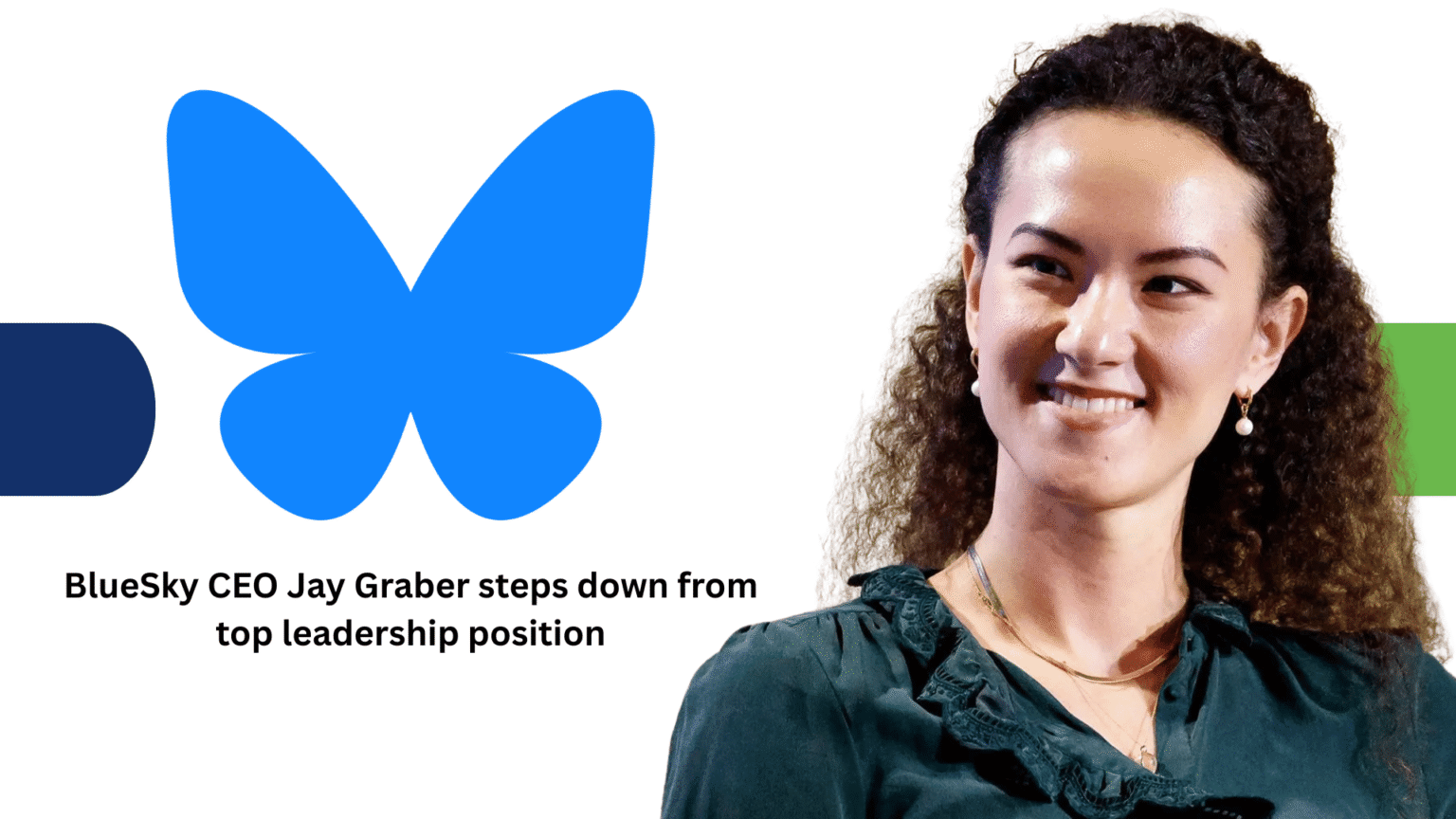

The decentralized social media application Bluesky has declared a significant change of command, with its CEO, Jay Graber, switching out of the top executive role and taking on a different role of Chief Innovation Officer. This shift is significant to the social networking platform that is fast gaining momentum, and it has become a formidable force worthy of competing with social networking sites such as X and Threads.
It was announced on Monday in one of the company blogs. The statement states that Graber will be diverting attention towards the field of innovation and creation of the core technology in Bluesky, and Tony Schneider will assume the position of the interim CEO. Schneider was a former CEO of Automattic, the company that owns WordPress.com, and is now a partner at the venture capital company True Ventures. Automattic and True Ventures are both investors in Bluesky, and as such, Schneider is a recognized face in the ecosystem of this firm.
Graber has been instrumental in transforming Bluesky into the one of the fastest emerging social media platforms over the past few years. The platform grew exponentially under her leadership to grow to over 43 million users. The immense portion of this growth was enabled following the acquisition of Twitter by Elon Musk, or now called X, which brought about far-reaching modifications on the policies, product designs, and culture of the community of Twitter. The availability of alternatives on many side of the users who were seeking them also contributed to its use.
Along with the growth of users, Graber assisted with the direction of the development of the underlying technology of Bluesky, called the AT Protocol. The protocol is open and decentralized to enable various applications and services to communicate in a common social network ecosystem. The concept of the protocol is to establish a more open internet in which the end users can be more in control of their data, identity, and the web experience. The technology has already stimulated a network of over 500 running applications on the technology.
Graber, in her blog article on the change of leadership, has stressed that Bluesky is at a different stage of its development. The company is more mature and in need of an experienced leader able to lead the company in the growth strategy and with years of experience in running large organizations. Graber claims that Schneider has sufficient experience to lead the company to the next stage, given his background.
Graber also gave personal thoughts of why she decided to leave the CEO position. Her reason is to find new things to do, create technology, and assist in transforming the dreams into tangible products. As the Chief Innovation Officer, she will be able to devote more attention to those strengths.
Her energy sources most of all are finding new ideas, making a vision a reality, and assisting people in finding their strengths. My response to that belief is stepping into a narrower scope whereby I can practice what makes me the most energized.
Meanwhile, the board of directors at Bluesky has been on the hunt to find an all round CEO who will in the long term take the place of Schneider in the interim position. In this transition, Schneider will be actively involved in the company as he still works on his positions at True Ventures.
The experience of Automattic as acquired by Schneider could be of particular use to Bluesky. Automattic has managed to commercialize the open-source technology with WordPress.com and at the same time achieved a balance between open-source community development and business sustainability. Bluesky is not an exception since it struggles to develop a profitable venture and retain the open and decentralized structure of its platform.
Despite the company recording tremendous growth, it has had its share of challenges associated with rapidly growing social media networks. One of the most intricate problems has been content moderation. Users have demanded heavier enforcement of dangerous materials whereas others would like to have the decentralized nature that Bluesky is advocating. The platform does not use centralized moderation only but invites users to control their experiences with the customizable moderation tools and filters offered by the community.
Besides the moderation issues, the company now has to traverse a changing regulatory environment. Social media sites are also being subject to laws imposed by governments that demand the companies to confirm user age or provide a much tighter safety net. These laws have already brought complications to the company.
Indicatively, a new legislation in the U.S state of Mississippi saw Bluesky lock down the platform altogether in the state. Some other states, such as Ohio, South Dakota and Wyoming have presented such similar acts where the platforms are expected to authenticate the ages of its users. Such legal necessities make it even more complicated to a business whose primary focus has been in the construction of new social networking protocols instead of addressing regulatory compliance.
In spite of these, Bluesky is still committed to growing its ecosystem. Schneider in his statement has emphasized the fast growth of the platform and the growing number of developers creating applications on the AT Protocol. In his opinion, the following step of the development of the company will be the empowerment of the third-party builders and the wider range of the network-related apps and services.
Schneider feels that one of the most challenging issues in the social media business has already been addressed by Bluesky: how to merge the features of the open network with the comfort of the contemporary social network.
Schneider wrote that Bluesky has broken a decades-long problem that had plagued the industry. It demonstrates that a social network can afford both the individual liberty and property that an open network has to offer and, yet, be as quick and simple to use as individuals anticipate contemporary social services.
With the transition to this next chapter as Bluesky progresses, the change of leadership can be seen as a more fundamental one of a change between the experimentation of startups and the development of a large platform. As Graber is concentrating on innovation and Schneider is concentrating more on the growth of the company operations, the company is optimistic of becoming a big player in the future of decentralized social networking.