logo logo
  • Home
  • About
  • Blogs
  • Services
    • Digital Marketing
    • Social Media Marketing
    • SEO
    • Web Development
    • Video Marketing
    • Content Marketing
  • Contact
Subscribe
Brightveins BlogsBrightveins Blogs
Search
  • Home
  • About
  • Blogs
  • Services
    • Digital Marketing
    • Social Media Marketing
    • SEO
    • Web Development
    • Video Marketing
    • Content Marketing
  • Contact
Subscribe
blog
Blog

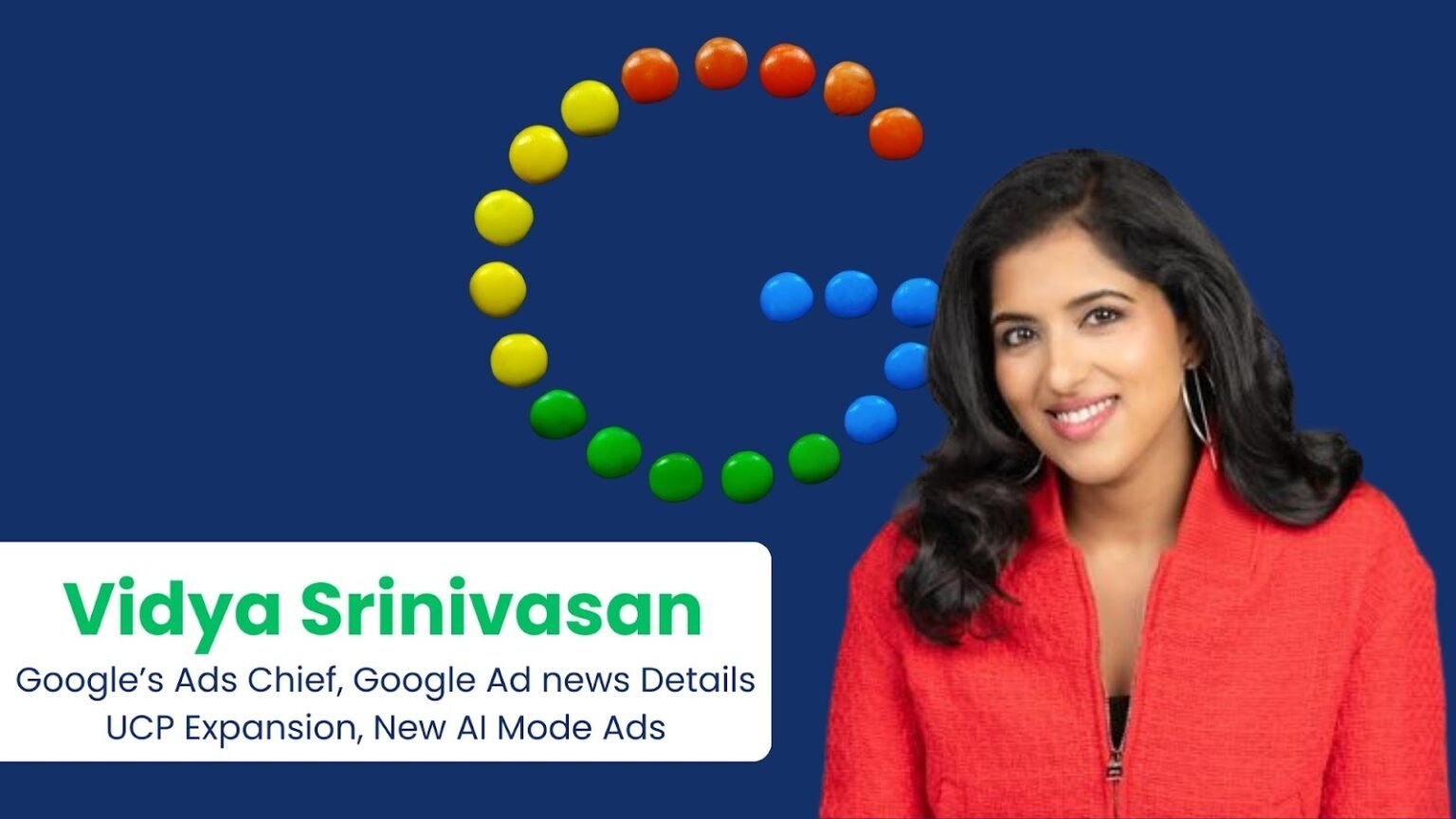
Vidya Srinivasan Google’s Ads Chief, Google Ad news Details UCP Expansion, New AI Mode Ads

Gaurav Kumar
By
Gaurav Kumar
ByGaurav Kumar
Follow:
Published: February 15, 2026
Share
7 Min Read
SHARE
Highlights
  • Google is expanding AI-powered shopping with UCP.
  • New AI ad formats will make ads more integrated and personalized.
  • Creator-brand matching and AI tools will drive smarter marketing in 2026.

Google is preparing for a major shift in how advertising, commerce, and artificial intelligence work together. In her third annual industry letter, Vidya Srinivasan, VP of Ads and Commerce at Google, shared a bold roadmap for 2026. The update highlights the expansion of the Universal Commerce Protocol (UCP), new AI-powered ad formats inside AI Mode, direct offers for shoppers, and advanced creator-brand matching tools across Search, YouTube, and Gemini.

Contents
Universal Commerce Protocol (UCP) New AI Mode Ad FormatsCreator-Brand Matching Powered by AIGrowth in AI-Generated Creative AssetsAI Max and Unlocking “Net-New” SearchWhy It Matters Google Marketing Live

The letter brings together several announcements previewed earlier at National Retail Federation (NRF 2026) and discussed in Google’s Q4 2025 earnings call. Now, the broader strategy is becoming clear: Google is building an ecosystem where AI agents, shopping, payments, creators, and advertisers operate in one connected environment.

Universal Commerce Protocol (UCP) 

One of the biggest updates is the confirmation that Universal Commerce Protocol (UCP) is now powering shopper search and purchase within AI mode in Gemini. Customers can purchase items directly from major retailers.

When Google first announced UCP at NRF, it revealed that the protocol was developed in partnership with Shopify and endorsed by more than 20 companies. Since launch, Google says it has received interest from hundreds of top tech companies, payment partners, and retailers.

UCP acts as a connective layer between shopping systems, payment infrastructure, and AI agents. While it currently focuses on retail, Google believes its potential goes far beyond ecommerce. The company positions UCP as the foundation for “agentic commerce,” where AI doesn’t just recommend products but can complete transactions intelligently on behalf of users.

New AI Mode Ad Formats

Another major announcement involves AI-powered ad formats inside Google’s AI Mode. Google is testing a new ad format that highlights retailers offering products relevant to a user’s query. These placements are clearly marked as sponsored but are designed to blend naturally within AI-generated responses.

The goal is to help shoppers easily discover convenient purchase options during the consideration phase of their buying journey. Rather than interrupting the user experience, these ads aim to feel like helpful suggestions integrated into AI answers.

Google is also expanding its “Direct Offers” feature, first introduced at NRF. This tool allows businesses to share special deals directly within AI Mode. Initially focused on price-based promotions, Google now plans to extend Direct Offers to include loyalty benefits, exclusive perks, and product bundles. This shift signals a move from simple discounting toward more strategic customer engagement.

For advertisers, this means greater flexibility in how they present value to consumers not just through price cuts, but through membership rewards and curated experiences.

Creator-Brand Matching Powered by AI

The letter also highlights YouTube’s growing importance in commerce. Srinivasan cited a Google/Kantar study of 2,160 weekly video viewers, describing YouTube creators as “today’s most trusted tastemakers.”

YouTube’s CEO, Neal Mohan, recently emphasized similar priorities in his own annual update, focusing on the intersection of creators and commerce.

Google is now introducing AI-powered tools that match brands with creator communities based on audience insights and content analysis. These tools help advertisers identify the most relevant creators for partnerships, improving authenticity and campaign performance.

The company began sourcing creator partnerships through its “Open Call” feature and plans to expand these capabilities in 2026. For brands, this reduces guesswork. For creators, it opens new monetization pathways aligned with their audience interests.

Growth in AI-Generated Creative Assets

AI is not just transforming ad placement—it’s reshaping creative production as well. Google reported a threefold increase in assets generated through Gemini in 2025. In Q4 alone, AI Max and Performance Max campaigns included nearly 70 million assets.

Google’s video generation tool, Veo 3, is now integrated into Google Ads Asset Studio alongside previously launched creative tools. This allows advertisers to generate video, text, and image assets more efficiently.

The rapid adoption of AI-generated creatives signals a broader industry trend: automation is becoming central to campaign execution. However, it also raises important questions about originality, control, and reporting transparency.

AI Max and Unlocking “Net-New” Search

Srinivasan described AI Max as unlocking “billions of net-new searches” that advertisers previously could not reach. Originally introduced as an expansion tool for Search campaigns, AI Max aims to connect advertisers with emerging queries that traditional keyword targeting might miss.

This suggests Google is redefining how search intent is captured and monetized. Instead of relying solely on static keyword lists,

AI dynamically interprets user needs and matches them with relevant commercial results.

For marketers, this represents both opportunity and uncertainty. While AI Max promises expanded reach, advertisers will likely seek clearer reporting and control over how these new queries are targeted and measured.

Why It Matters

Many of these announcements were shared earlier in pieces UCP at NRF, monetization insights during earnings calls, and AI Mode discussions in product previews. What Srinivasan’s letter does is assemble these parts into a coherent strategic vision.

Google sees 2026 as the year agentic commerce moves from concept to operational reality. UCP forms the infrastructure layer. AI Mode integrates shopping into conversational experiences. Creator partnerships drive influence. And AI-generated creatives accelerate production.

For advertisers, the key updates include:

Expansion of Direct Offers beyond price discounts

Testing AI Mode ad formats in new categories, including travel

Growth in AI-powered creative tools

 Google Marketing Live

Srinivasan did not provide specific launch dates for upcoming features. More detailed announcements may arrive at Google Marketing Live, the company’s annual advertising event typically held in the spring.

What is clear, however, is that Google is building a future where AI agents do more than recommend they transact. Advertising becomes integrated into AI conversations. Creators become commerce partners. And protocols like UCP serve as the digital infrastructure behind it all.

As 2026 approaches, advertisers, retailers, and creators alike will need to adapt to a more automated, AI-driven commerce landscape, one where the lines between search, shopping, and advertising continue to blur.

Share This Article
Facebook Copy Link Print
Next Article meta Meta Job Offer: Meta’s New Data Center in Lebanon, Indiana Marks a Major AI Investment
Leave a Comment Leave a Comment

Leave a Reply Cancel reply

Your email address will not be published. Required fields are marked *

Let's Connect

FacebookLike
XFollow
PinterestPin
InstagramFollow
YoutubeSubscribe
LinkedInFollow

Popular Posts

Uber Questions AI Spending Returns

Gaurav Kumar
8 Min Read

Google Adds AI Scam Detection to Android

Gaurav Kumar
7 Min Read
deepseek-launches-new-ai-model-built-for-huawei-chips-as-china-pushes-for-tech-independence

DeepSeek Launches New AI Model Built for Huawei Chips as China Pushes for Tech Independence

Gaurav Kumar
7 Min Read
Artificial intelligence has sparked one of the biggest workplace debates of the decade. While some experts warn that automation could eliminate millions of jobs, others believe AI will become a powerful tool that creates entirely new opportunities. Adding his voice to the conversation, Amazon founder Jeff Bezos has shared a much more optimistic outlook. Speaking at the VivaTech conference in Paris, Bezos argued that AI is unlikely to make people obsolete. Instead, he believes the technology will increase the demand for skilled workers, drive innovation, and reshape industries in ways that create more employment rather than reduce it. His perspective offers an important counterpoint to growing concerns about the future of work in an AI-driven world. Why Jeff Bezos Believes AI Will Create More Jobs The fear that artificial intelligence will replace human workers has become increasingly common as AI tools automate repetitive tasks and improve productivity. However, Bezos believes this concern overlooks a bigger reality. According to him, AI will help remove many of the limitations that currently prevent businesses from growing. As organizations become more productive and innovative, they will require more people to build, manage, improve, and expand these new systems. Rather than creating mass unemployment, AI could generate a greater need for skilled professionals across multiple industries. In Bezos' view, technology has historically expanded economic opportunities instead of eliminating them permanently. AI Has Always Changed Jobs–Not Eliminated Work History shows that major technological advancements often transform jobs instead of making human workers unnecessary. The Industrial Revolution introduced machines that automated manufacturing, yet it also created entirely new professions. Similarly, the rise of computers and the internet replaced certain manual tasks while generating millions of careers in software development, digital marketing, cybersecurity, cloud computing, and e-commerce. Artificial intelligence appears to be following the same pattern. Instead of replacing every employee, AI is increasingly taking over repetitive and time-consuming tasks, allowing people to focus on creativity, strategy, decision-making, and customer relationships. This shift could improve productivity while opening the door to entirely new job categories. AI Is Creating New Career Opportunities As AI adoption accelerates, businesses are already hiring professionals with skills that barely existed a few years ago. Emerging roles include: AI Prompt Engineers Machine Learning Specialists AI Product Managers Data Scientists AI Ethics Consultants Automation Experts AI Content Strategists Human-AI Collaboration Specialists Beyond technology companies, sectors such as healthcare, education, finance, manufacturing, logistics, and marketing are increasingly integrating AI into their daily operations. This growing demand suggests that future workplaces will rely on collaboration between humans and intelligent systems rather than replacing one with the other. Not Everyone Shares the Same View While Bezos remains optimistic, opinions across the technology industry are divided. Some business leaders and economists have warned that AI could disrupt entry-level jobs, administrative roles, and repetitive office tasks. There are also concerns that rapid automation could widen skill gaps if workers are not given opportunities to adapt. Labor organizations have emphasized that AI should be implemented responsibly, ensuring productivity gains benefit employees as well as businesses. The broader consensus is that AI's long-term impact will depend less on the technology itself and more on how governments, organizations, and educational institutions prepare the workforce for change. Human Skills Will Become Even More Valuable One area where experts largely agree is that uniquely human abilities will continue to matter. Artificial intelligence can analyze data, generate content, and automate workflows, but it still struggles to replicate qualities such as the following: Creative thinking Emotional intelligence Leadership Critical decision-making Ethical judgment Complex problem-solving Relationship building As AI handles routine tasks, these human-centered skills are expected to become even more valuable in the modern workplace. Rather than competing with AI, professionals who learn to work alongside it are likely to have a significant advantage. Beyond AI: Bezos' Vision for the Future During the conference, Bezos also discussed his long-term ambitions beyond artificial intelligence. He reaffirmed his commitment to space exploration through Blue Origin, emphasizing that humanity should establish a permanent presence on the Moon instead of treating lunar missions as short-term visits. According to Bezos, expanding into space will require continuous innovation in robotics, automation, manufacturing, and AI-powered technologies. Although these projects face technical challenges, they also represent emerging industries that could create entirely new employment opportunities over the coming decades. What Businesses Should Learn from This Regardless of whether every prediction proves accurate, one message is becoming increasingly clear. Artificial intelligence is transforming the workplace. Organizations that invest in employee training, digital skills, and responsible AI adoption will be better positioned to benefit from this technological shift. Rather than viewing AI solely as a cost-cutting tool, forward-thinking businesses are beginning to see it as a way to improve productivity while empowering employees to focus on higher-value work. The future of work will likely be defined by collaboration between human expertise and intelligent automation. Conclusion Jeff Bezos' belief that AI will create more jobs than it replaces offers an encouraging perspective amid widespread uncertainty. While automation will undoubtedly reshape many existing roles, history suggests that technological revolutions often generate new industries, careers, and opportunities that were previously unimaginable. The real challenge is not whether AI will replace people, but whether individuals and organizations are prepared to adapt. For businesses, professionals, and students alike, the future belongs to those who embrace continuous learning, develop uniquely human skills, and understand how to use AI as a powerful partner rather than viewing it solely as a competitor. As artificial intelligence continues to evolve, success may depend less on resisting change and more on learning how to grow alongside it.

Jeff Bezos Says AI Will Create More Jobs, Not Replace Humans: What It Means for the Future of Work

Gaurav Kumar
7 Min Read

You Might Also Like

tcs-open-ai
Blog

TCS AI, Tata Group and OpenAI form a strategic partnership

8 Min Read
Google Sans Flex Open Font License
Blog

Google Sans Flex Open Font License

6 Min Read
denmark-data-centers-a-massive-surge-in-artificial-intelligence-and-cloud-computing
Blog

Denmark Data Centers – A Massive Surge in Artificial Intelligence and Cloud Computing

9 Min Read
meta-moltbook
Blog

Meta Platforms Acquires AI Social Network Moltbook

8 Min Read

Social Networks

logo

Brightveins partners with businesses to build trust-driven digital legacies through innovation, AI-powered insights, and evolving marketing strategies focusing on long-term growth, strong brand identity, and meaningful impact.

© 2026 — Brightveins. All Rights Reserved.

  • Terms and Conditions
  • Privacy Policy