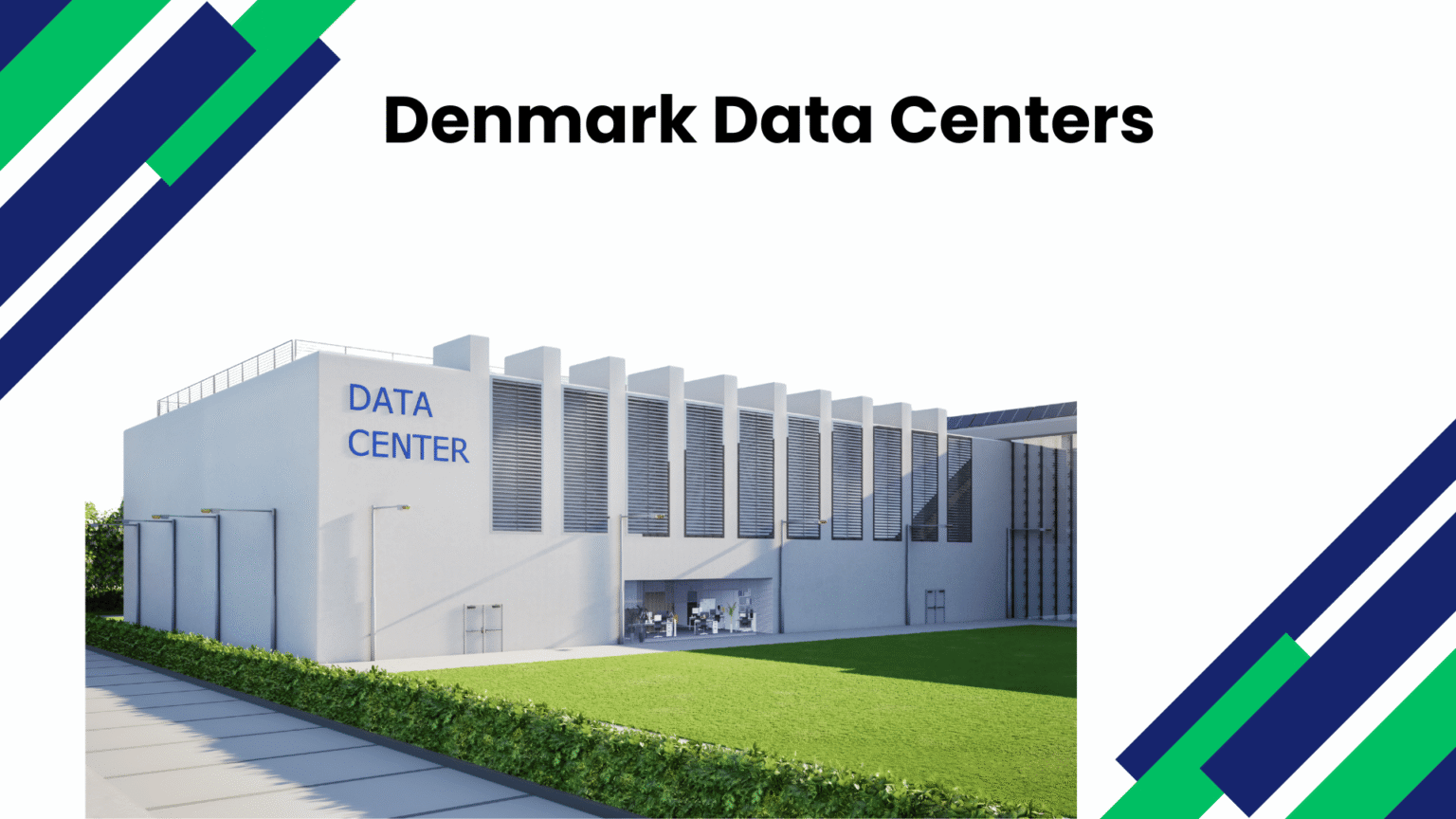


The rise of artificial intelligence and cloud computing is causing an unprecedented surge in the number of data centers throughout the world. These are the facilities that provide power for streaming platforms to AI tools, and they consume massive amounts of electricity. Nordic countries, such as Denmark, used to be regarded as prime locations for data centers due to their cool climate and abundant resources of renewable energy, but this is now a problem: the power grid is failing to keep up.
The issue took the limelight in Denmark after its state-owned grid operator Energinet temporarily suspended new grid connection agreements. The move follows a surge of applications from firms wanting power for new developments, particularly data centres. This case illustrates a worldwide problem as governments try to balance technological development with energy security and sustainability.
This creates pressure from the increased demand for energy.
Data centers use a lot of electrical power since they’re running all the time and have to be cooled by sophisticated systems to avoid server overheating. As AI technologies are rapidly emerging, energy demands have grown yet more. For AI systems, a robust computing infrastructure is essential, and numerous tech firms are in a race to construct larger, more sophisticated data centers.
In Denmark, the strain on the power grid is so much that it cannot be ignored. About 60 GW of projects are said to be waiting for grid connections and the country’s peak electricity demand is some 7 GW. Only data centers comprise almost 25 percent of requested capacity. This power-energy mismatch has necessitated authorities to rethink power distribution.
The problem is not limited to Denmark. European and American countries are also increasingly worried about whether their power networks will be able to sustain data center expansion. As many countries are scaling up electrification due to the clean energy transition, the AI boom has helped drive electricity consumption and accelerate the rate at which it is growing.
In response, there has been a global backlash against data centers.
The communities, environmental groups and policymakers are increasingly accusing data centers. These facilities are said to be inefficient in their use of electricity, land and their return on investment for jobs.
In the USA, a few states are considering limiting the construction of new data centers. Maine recently proposed a ban and legislators in Pennsylvania, Virginia and Oklahoma talk about curbing the growth of the industry. Issues such as electricity costs, stress on local electrical grids, and environmental effects are raised.
Other than in the Netherlands and Ireland, no other countries have tried temporary moratoriums on data centers in Europe so far. Later, both countries relaxed restrictions under certain conditions, but both decisions were made in reaction to the growing concerns of energy shortages and infrastructure limitations.
Now Denmark could be another country that is limiting data centre development, due to power restrictions.
What are the “Hunger Games” of energy policy?
Experts in the industry say it is a battle for scarce electricity, a fight for electricity. Not only are businesses competing for the same power infrastructure, but so are hospitals, transportation systems, battery storage projects and data centers.
Some analysts have dubbed this the “energy policy hunger games” in which governments must choose which segments should be given the priority. The Danish authorities are debating if local industries and vital public functions should be given priority over foreign-owned data centers.
Denish customers may have to be preferred to energy-intensive solutions like data centers and battery parks, former Energy Minister Lars Aagaard, said before the country’s recent elections. His statements represented the increased political pressure to make electricity resources serve the national economic and social needs above all.
Industry leaders recognise the need for finite growth. Data Center Industry Association (DCIA) CEO Henrik Hansen acknowledged that there are lots of projects in the queue now which are speculative and may never be constructed. He said that there is a need for a more rigorous criteria to identify what projects are indeed viable and useful for society.
Factors might include investment readiness, economic impact, job creation and sustainability. There are others who think that countries should establish separate queues for various branches of industry instead of putting all people in direct competition with each other.
The risks that an investment poses and the concerns of the industry.
Regulators are concerned about safeguarding the power grid, but data center owners say that extended delays may lead to a loss of confidence in the industry for investment. Nordic countries have made efforts for years to attract International technology companies, by offering renewable energy, stable infrastructure and good business conditions.
When access to the grid is not guaranteed, companies may move investment to other areas where it is easier to secure an electricity connection. This may affect the digital economy related to economic growth, technology development and job creation.
The uncertainty is particularly troubling given that data center demand is projected to keep rising at a very high rate for the next decade. Large-scale computing infrastructure is vital to AI systems, cloud computing, streaming services, and digital businesses.
Industry has called on government to increase grid capacity and not just limit projects. They say that the modern economies are increasingly reliant on digital infrastructure and restricting growth in data centers could hamper innovation.
Striking a balance between technology and sustainability.
This Danish discussion is representative of the problem the world faces of balancing technological advancement and sustainable management of energy. Governments are being called upon to both ensure that electricity is available at a reasonable cost and to encourage the development of AI and digital transformation.
While expansion of renewable energy can be part of the answer, it takes some time to construct new wind farms, solar plants and transmission. The other big problem is that the power-grids need to be upgraded as demands are expected to increase.
Meanwhile, data center providers are urged to be efficient. Numerous companies are investing in cutting-edge cooling systems, renewable energy agreements, and technologies that minimize electricity usage. Some companies are even trying to use the waste heat produced by the data center to heat nearby buildings and homes.
There is a Tipping Point for the Digital Economy.
Denmark’s decision to halt the most recent grid connection agreements may go down in history as a turning point in the discussion of data centers and energy policy worldwide. With the growing use of AI, countries everywhere could be confronted with similar decisions on limited electricity supply.
This shows that the digital economy is not independent of the physical infrastructure problems. While data centers can be the backbone of the internet and artificial intelligence, they are also heavily reliant on the real world energy system which has finite limits.
Governments, tech firms, and energy companies will need to collaborate to develop solutions that foster innovation without straining the power grid in the upcoming years. Denmark’s deliberations could shape the path forward for other countries in terms of AI infrastructure and energy sustainability.