logo logo
  • Home
  • About
  • Blogs
  • Services
    • Digital Marketing
    • Social Media Marketing
    • SEO
    • Web Development
    • Video Marketing
    • Content Marketing
  • Contact
Subscribe
Brightveins BlogsBrightveins Blogs
Search
  • Home
  • About
  • Blogs
  • Services
    • Digital Marketing
    • Social Media Marketing
    • SEO
    • Web Development
    • Video Marketing
    • Content Marketing
  • Contact
Subscribe
denmark-data-centers-a-massive-surge-in-artificial-intelligence-and-cloud-computing
Blog

Denmark Data Centers – A Massive Surge in Artificial Intelligence and Cloud Computing

Gaurav Kumar
By
Gaurav Kumar
ByGaurav Kumar
Follow:
Published: May 20, 2026
Share
9 Min Read
SHARE
Highlights
  • Denmark paused new data center grid connections.
  • AI growth is driving massive power demand.
  • Energy access priorities may change globally.

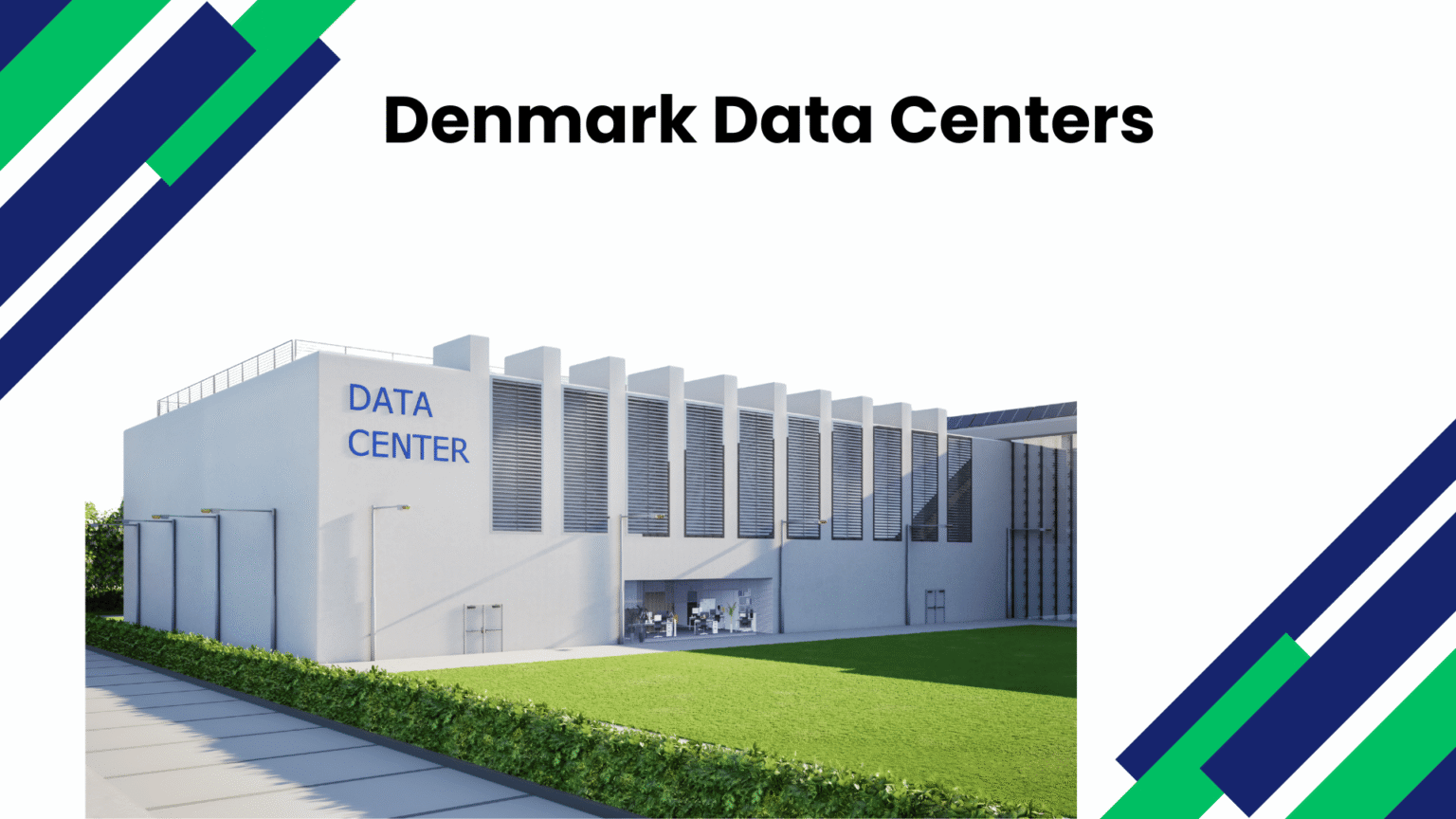
The rise of artificial intelligence and cloud computing is causing an unprecedented surge in the number of data centers throughout the world. These are the facilities that provide power for streaming platforms to AI tools, and they consume massive amounts of electricity. Nordic countries, such as Denmark, used to be regarded as prime locations for data centers due to their cool climate and abundant resources of renewable energy, but this is now a problem: the power grid is failing to keep up.

The issue took the limelight in Denmark after its state-owned grid operator Energinet temporarily suspended new grid connection agreements. The move follows a surge of applications from firms wanting power for new developments, particularly data centres. This case illustrates a worldwide problem as governments try to balance technological development with energy security and sustainability.

This creates pressure from the increased demand for energy.

Data centers use a lot of electrical power since they’re running all the time and have to be cooled by sophisticated systems to avoid server overheating. As AI technologies are rapidly emerging, energy demands have grown yet more. For AI systems, a robust computing infrastructure is essential, and numerous tech firms are in a race to construct larger, more sophisticated data centers.

In Denmark, the strain on the power grid is so much that it cannot be ignored. About 60 GW of projects are said to be waiting for grid connections and the country’s peak electricity demand is some 7 GW. Only data centers comprise almost 25 percent of requested capacity. This power-energy mismatch has necessitated authorities to rethink power distribution.

The problem is not limited to Denmark. European and American countries are also increasingly worried about whether their power networks will be able to sustain data center expansion. As many countries are scaling up electrification due to the clean energy transition, the AI boom has helped drive electricity consumption and accelerate the rate at which it is growing.

In response, there has been a global backlash against data centers.

The communities, environmental groups and policymakers are increasingly accusing data centers. These facilities are said to be inefficient in their use of electricity, land and their return on investment for jobs.

In the USA, a few states are considering limiting the construction of new data centers. Maine recently proposed a ban and legislators in Pennsylvania, Virginia and Oklahoma talk about curbing the growth of the industry. Issues such as electricity costs, stress on local electrical grids, and environmental effects are raised.

Other than in the Netherlands and Ireland, no other countries have tried temporary moratoriums on data centers in Europe so far. Later, both countries relaxed restrictions under certain conditions, but both decisions were made in reaction to the growing concerns of energy shortages and infrastructure limitations.

Now Denmark could be another country that is limiting data centre development, due to power restrictions.

What are the “Hunger Games” of energy policy?

Experts in the industry say it is a battle for scarce electricity, a fight for electricity. Not only are businesses competing for the same power infrastructure, but so are hospitals, transportation systems, battery storage projects and data centers.

Some analysts have dubbed this the “energy policy hunger games” in which governments must choose which segments should be given the priority. The Danish authorities are debating if local industries and vital public functions should be given priority over foreign-owned data centers.

Denish customers may have to be preferred to energy-intensive solutions like data centers and battery parks, former Energy Minister Lars Aagaard, said before the country’s recent elections. His statements represented the increased political pressure to make electricity resources serve the national economic and social needs above all.

Industry leaders recognise the need for finite growth. Data Center Industry Association (DCIA) CEO Henrik Hansen acknowledged that there are lots of projects in the queue now which are speculative and may never be constructed. He said that there is a need for a more rigorous criteria to identify what projects are indeed viable and useful for society.

Factors might include investment readiness, economic impact, job creation and sustainability. There are others who think that countries should establish separate queues for various branches of industry instead of putting all people in direct competition with each other.

The risks that an investment poses and the concerns of the industry.

Regulators are concerned about safeguarding the power grid, but data center owners say that extended delays may lead to a loss of confidence in the industry for investment. Nordic countries have made efforts for years to attract International technology companies, by offering renewable energy, stable infrastructure and good business conditions.

When access to the grid is not guaranteed, companies may move investment to other areas where it is easier to secure an electricity connection. This may affect the digital economy related to economic growth, technology development and job creation.

The uncertainty is particularly troubling given that data center demand is projected to keep rising at a very high rate for the next decade. Large-scale computing infrastructure is vital to AI systems, cloud computing, streaming services, and digital businesses.

Industry has called on government to increase grid capacity and not just limit projects. They say that the modern economies are increasingly reliant on digital infrastructure and restricting growth in data centers could hamper innovation.

Striking a balance between technology and sustainability.

This Danish discussion is representative of the problem the world faces of balancing technological advancement and sustainable management of energy. Governments are being called upon to both ensure that electricity is available at a reasonable cost and to encourage the development of AI and digital transformation.

While expansion of renewable energy can be part of the answer, it takes some time to construct new wind farms, solar plants and transmission. The other big problem is that the power-grids need to be upgraded as demands are expected to increase.

Meanwhile, data center providers are urged to be efficient. Numerous companies are investing in cutting-edge cooling systems, renewable energy agreements, and technologies that minimize electricity usage. Some companies are even trying to use the waste heat produced by the data center to heat nearby buildings and homes.

There is a Tipping Point for the Digital Economy.

Denmark’s decision to halt the most recent grid connection agreements may go down in history as a turning point in the discussion of data centers and energy policy worldwide. With the growing use of AI, countries everywhere could be confronted with similar decisions on limited electricity supply.

This shows that the digital economy is not independent of the physical infrastructure problems. While data centers can be the backbone of the internet and artificial intelligence, they are also heavily reliant on the real world energy system which has finite limits.

Governments, tech firms, and energy companies will need to collaborate to develop solutions that foster innovation without straining the power grid in the upcoming years. Denmark’s deliberations could shape the path forward for other countries in terms of AI infrastructure and energy sustainability. 

Share This Article
Facebook Copy Link Print
Previous Article openai-smartphones-are-coming-may-be-on-the-horizon-sooner OpenAI Smartphones are Coming May be On the Horizon Sooner
Next Article mediatek-reinforces-ai-chip-strategy-with-former-tsmc-official  MediaTek Reinforces AI Chip Strategy with former TSMC Official
Leave a Comment Leave a Comment

Leave a Reply Cancel reply

Your email address will not be published. Required fields are marked *

Let's Connect

FacebookLike
XFollow
PinterestPin
InstagramFollow
YoutubeSubscribe
LinkedInFollow

Popular Posts

Pope Leo XIV Urges Ethical AI Development

Gaurav Kumar
8 Min Read
google-launches-ai-powered-replacement-for-chromebooks

Googlebook: Google launches AI-powered replacement for Chromebooks

Gaurav Kumar
10 Min Read
yt-thumbnail

YouTube Creators Can Now Upload Up to 50 MB Thumbnails

Gaurav Kumar
5 Min Read
Artificial intelligence has sparked one of the biggest workplace debates of the decade. While some experts warn that automation could eliminate millions of jobs, others believe AI will become a powerful tool that creates entirely new opportunities. Adding his voice to the conversation, Amazon founder Jeff Bezos has shared a much more optimistic outlook. Speaking at the VivaTech conference in Paris, Bezos argued that AI is unlikely to make people obsolete. Instead, he believes the technology will increase the demand for skilled workers, drive innovation, and reshape industries in ways that create more employment rather than reduce it. His perspective offers an important counterpoint to growing concerns about the future of work in an AI-driven world. Why Jeff Bezos Believes AI Will Create More Jobs The fear that artificial intelligence will replace human workers has become increasingly common as AI tools automate repetitive tasks and improve productivity. However, Bezos believes this concern overlooks a bigger reality. According to him, AI will help remove many of the limitations that currently prevent businesses from growing. As organizations become more productive and innovative, they will require more people to build, manage, improve, and expand these new systems. Rather than creating mass unemployment, AI could generate a greater need for skilled professionals across multiple industries. In Bezos' view, technology has historically expanded economic opportunities instead of eliminating them permanently. AI Has Always Changed Jobs–Not Eliminated Work History shows that major technological advancements often transform jobs instead of making human workers unnecessary. The Industrial Revolution introduced machines that automated manufacturing, yet it also created entirely new professions. Similarly, the rise of computers and the internet replaced certain manual tasks while generating millions of careers in software development, digital marketing, cybersecurity, cloud computing, and e-commerce. Artificial intelligence appears to be following the same pattern. Instead of replacing every employee, AI is increasingly taking over repetitive and time-consuming tasks, allowing people to focus on creativity, strategy, decision-making, and customer relationships. This shift could improve productivity while opening the door to entirely new job categories. AI Is Creating New Career Opportunities As AI adoption accelerates, businesses are already hiring professionals with skills that barely existed a few years ago. Emerging roles include: AI Prompt Engineers Machine Learning Specialists AI Product Managers Data Scientists AI Ethics Consultants Automation Experts AI Content Strategists Human-AI Collaboration Specialists Beyond technology companies, sectors such as healthcare, education, finance, manufacturing, logistics, and marketing are increasingly integrating AI into their daily operations. This growing demand suggests that future workplaces will rely on collaboration between humans and intelligent systems rather than replacing one with the other. Not Everyone Shares the Same View While Bezos remains optimistic, opinions across the technology industry are divided. Some business leaders and economists have warned that AI could disrupt entry-level jobs, administrative roles, and repetitive office tasks. There are also concerns that rapid automation could widen skill gaps if workers are not given opportunities to adapt. Labor organizations have emphasized that AI should be implemented responsibly, ensuring productivity gains benefit employees as well as businesses. The broader consensus is that AI's long-term impact will depend less on the technology itself and more on how governments, organizations, and educational institutions prepare the workforce for change. Human Skills Will Become Even More Valuable One area where experts largely agree is that uniquely human abilities will continue to matter. Artificial intelligence can analyze data, generate content, and automate workflows, but it still struggles to replicate qualities such as the following: Creative thinking Emotional intelligence Leadership Critical decision-making Ethical judgment Complex problem-solving Relationship building As AI handles routine tasks, these human-centered skills are expected to become even more valuable in the modern workplace. Rather than competing with AI, professionals who learn to work alongside it are likely to have a significant advantage. Beyond AI: Bezos' Vision for the Future During the conference, Bezos also discussed his long-term ambitions beyond artificial intelligence. He reaffirmed his commitment to space exploration through Blue Origin, emphasizing that humanity should establish a permanent presence on the Moon instead of treating lunar missions as short-term visits. According to Bezos, expanding into space will require continuous innovation in robotics, automation, manufacturing, and AI-powered technologies. Although these projects face technical challenges, they also represent emerging industries that could create entirely new employment opportunities over the coming decades. What Businesses Should Learn from This Regardless of whether every prediction proves accurate, one message is becoming increasingly clear. Artificial intelligence is transforming the workplace. Organizations that invest in employee training, digital skills, and responsible AI adoption will be better positioned to benefit from this technological shift. Rather than viewing AI solely as a cost-cutting tool, forward-thinking businesses are beginning to see it as a way to improve productivity while empowering employees to focus on higher-value work. The future of work will likely be defined by collaboration between human expertise and intelligent automation. Conclusion Jeff Bezos' belief that AI will create more jobs than it replaces offers an encouraging perspective amid widespread uncertainty. While automation will undoubtedly reshape many existing roles, history suggests that technological revolutions often generate new industries, careers, and opportunities that were previously unimaginable. The real challenge is not whether AI will replace people, but whether individuals and organizations are prepared to adapt. For businesses, professionals, and students alike, the future belongs to those who embrace continuous learning, develop uniquely human skills, and understand how to use AI as a powerful partner rather than viewing it solely as a competitor. As artificial intelligence continues to evolve, success may depend less on resisting change and more on learning how to grow alongside it.

Jeff Bezos Says AI Will Create More Jobs, Not Replace Humans: What It Means for the Future of Work

Gaurav Kumar
7 Min Read

You Might Also Like

Blog

Disney Plus May Introduce a Free Ad-Supported Tier

7 Min Read
google-chrome-hidden-gemini-ai-installation-concerns
Blog

Google Chrome’s Hidden Gemini AI Installation Sparks Transparency Concerns

4 Min Read
microsoft-outlook-lite-for-android-to-stop-working-after-may-25
Blog

Microsoft Outlook Lite for Android to Stop Working After May 25

6 Min Read
google-set-to-fix-ai-mode-bug-altering-title-links-and-citations
Blog

Google Set to Fix AI Mode Bug Altering Title Links and Citations

6 Min Read

Social Networks

logo

Brightveins partners with businesses to build trust-driven digital legacies through innovation, AI-powered insights, and evolving marketing strategies focusing on long-term growth, strong brand identity, and meaningful impact.

© 2026 — Brightveins. All Rights Reserved.

  • Terms and Conditions
  • Privacy Policy