

No longer an abstract idea, the rapid implementation of artificial intelligence in traditional industries is taking center stage and actively transforming the way industries, such as farming, function. A prime example of this change is Halter, a pioneering agri-tech company that has literally integrated AI, wearable technology, and data analytics to transform livestock management. Most recently, Halter hit the news when he raised new capital with a valuation of an astonishing $2 billion, led by the Founders Fund led by Peter Thiel. Not only does this milestone serve to indicate a level of investor trust in the firm, but it also speaks to the increasing role of AI-based solutions in agriculture.
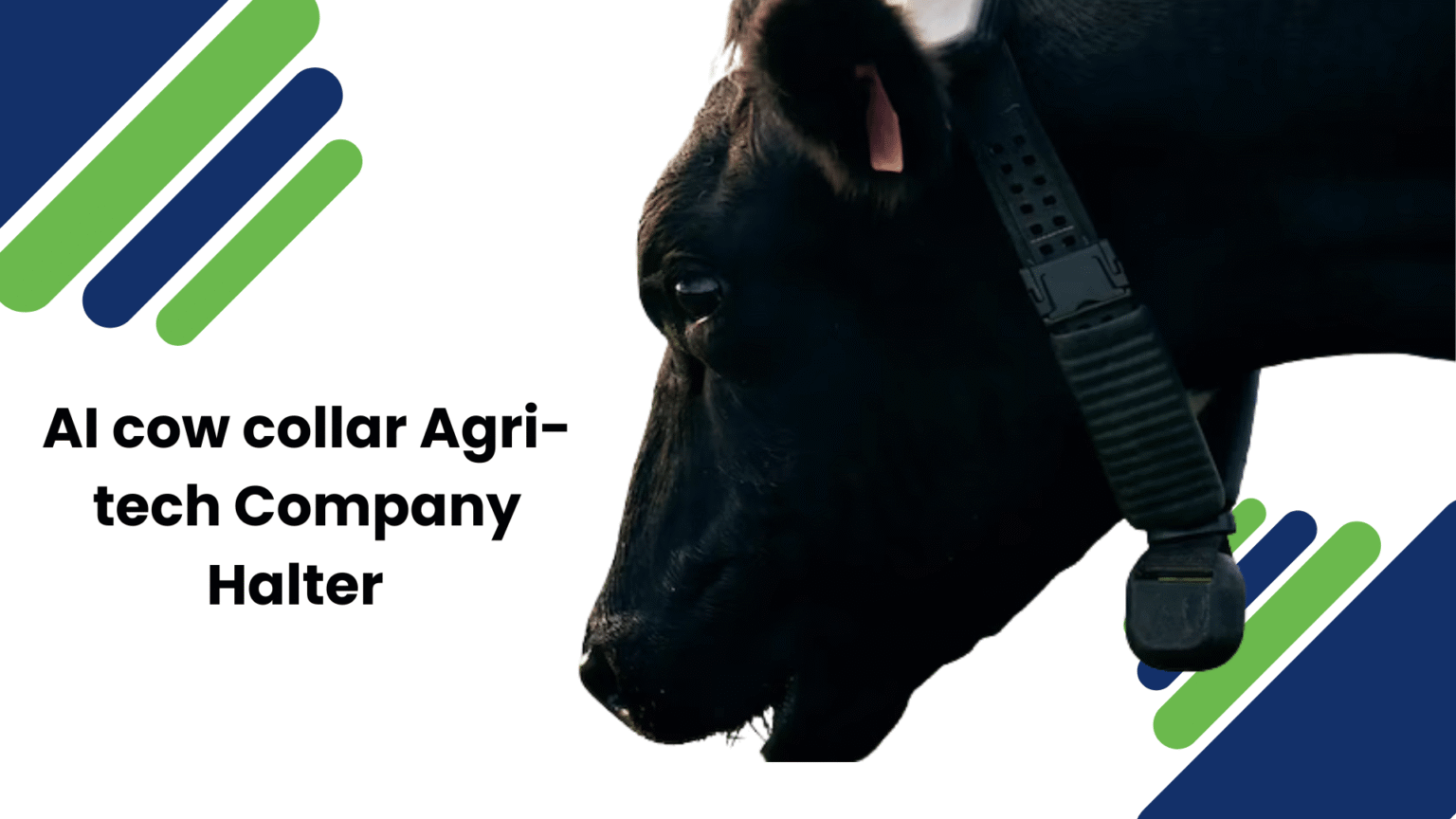
The main product Halter is offering is an ingenious, GPS-powered cattle collar. The technology pioneered by Halter presents a more scalable, flexible and efficient method of herding livestock compared to traditional livestock management methods that depend heavily on mechanical fences and manual herding. Every cow will wear a gadget, which will be tracked by a GPS and powered by the solar-powered device. The collar interacts with the animal by use of sound and small vibrations, and directs them to move about without having to apply force or physical obstacles.
The innovation will allow farmers to manage and regulate their herds using a mobile application. All they need is to press a couple of buttons and tell the cattle where they should go to graze, go to the milk stations, or go to rest. This degree of control greatly minimizes labor demands and provides farmers with the benefit of optimizing the use of pastures. It also does not require the physical building and maintenance of physical fences, which is both expensive and time consuming.
The intelligent software platform, which is named the Cowgorithm, is what sets Halter apart, however. This system is the brain of the hardware in which vast amounts of data on each animal are processed. The Cowgorithm performs real-time decisions by analyzing behavioral pattern, health indicators and environmental factors using machine learning algorithms. Examples are that it can move masses of cattle at the same time, it can modify grazing decisions based on pasture quality, it can even detect early signs of disease.
Of significant value is the health tracking the system has to offer. The collars constantly monitor indicators of digestion, fertility cycles and activity levels. This information is then processed to detect any anomally or possible health problems. This can be easily detectable at an early stage and thus farmers can respond in time to minimize the risk of disease, and enhance the overall herd productivity. Such insights can be significant in an industry where even trivial inefficiencies can result in huge losses.
The technology developed by Halter has been already implemented at scale in several countries. The platform is already linked to hundreds of thousands of cows, proving it to be a viable option and gaining more and more support among farmers. In places such as the United States, more than 11,000 miles of the virtual fencing have been developed using the system. In addition to saving on infrastructure expenses, this electronic substitute to the conventional fencing, offers more versatility in the management of the land and animals.
The economic advantages are also a force to reckon with. With the physical barriers removed and labor expenses lowered, farmers are able to make large savings. Furthermore, the subscription-based pricing combination, which is between 5 and 8 dollars per animal per month, guarantees Halter a steady and scalable source of revenue. As a farmer, this model matches costs to usage so the technology would be available to them and would show them returns on their investment.
Customer retention is another benefit of this type of subscription. As soon as a farm has incorporated the system developed by Halter into their routine, it becomes less feasible to revert to the old-fashioned way of doing things. The platform will be an inseparable element of farm management, which will promote long-term relations between the company and its users. This results in a win-win business model.
The history of the company gives it an added credibility and culture of innovation, too. With an aerospace background and having worked with Rocket Lab, Halter has a different take on agricultural problems. This multi-industry experience has facilitated the creation of sophisticated computer hardware and new software solutions that are credible and effective.
The new funding round that increased Halter valuation by twofold (2 billion dollars to 2 billions) is part of a larger trend in the investment landscape. Venture capital firms are turning to agri-tech with growing attention, as it can help solve worldwide problems, including food security, resource efficiency and climate change. Farming companies are increasing productivity and making farming more sustainable by utilizing AI and automation to improve farming, such as Halter.
In the future, the consequences of this kind of technology are immense. With the world population steadily on the rise, the pressure on efficient and scalable food production systems will only rise. Artificial intelligence (AI) based solutions such as those provided by Halter can provide a way to fulfill this need without harming the environment. Virtual fencing decreases the degradation of land, data-driven knowledge improves the use of resources, and automated systems release human labor to more important work.
Finally, the success of Halter, or the conversion of a startup into a 2-billion dollar company can be taken as an example of the power of innovation in agriculture. Integrating wearable technology, AI, and a profound grasp of the needs of the farming sector, the company has developed a solution that will cover various pain points concurrently. The fact that major investors such as Peter Thiel, and even companies such as Founders Fund have become involved in it only proves its potential. With AI seeping into the old economy, Halter is one of the most compelling stories of how technology can transform even the oldest of practices and usher in a smarter and more sustainable future in agriculture.